


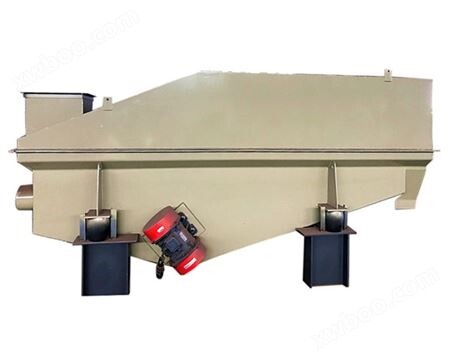
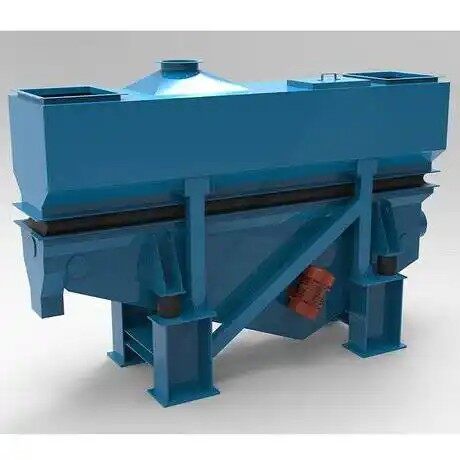
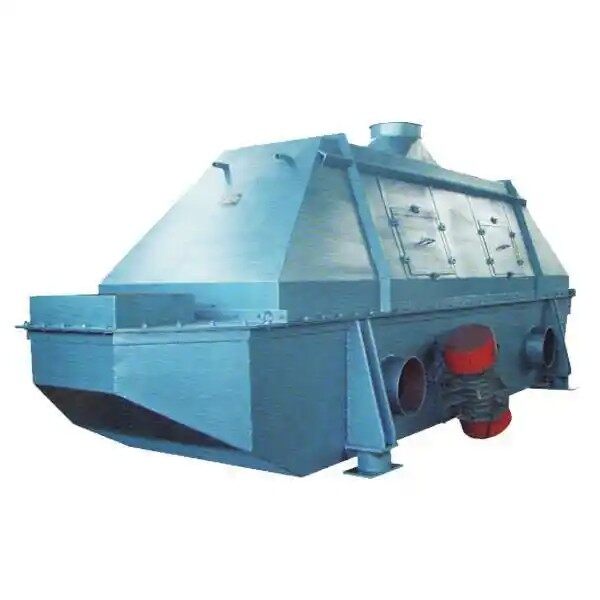
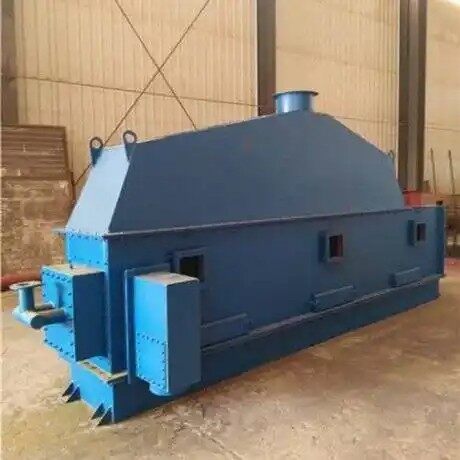
Folded boiling cooling bed
With the continuous improvement of the degree of mechanization and automation in molding, the demand for molding sand has increased, and the recycling time of used sand has thus been greatly shortened. Many foundries' molding sand lines do not have sufficient sand cooling equipment set up in the sand treatment system, resulting in the problem of excessively high temperature of reused used sand during hot summers and full-load operation. Excessively high temperature of molding sand can cause a series of difficulties in production, such as unstable performance of molding sand, easy adhesion to the template and sand hopper, easy dehydration of the mold surface, which leads to an increase in the scrap rate of castings and deterioration of working conditions, etc. The boiling cooling bed is precisely designed to improve the excessively high temperature of old sand.
In the past, the cooling of old sand was mostly achieved by using cooling rollers, increasing the length of the old sand conveyor belt and expanding the intermediate sand storage hopper, etc. These often have unsatisfactory effects. The boiling cooling bed has improved the previous method that mainly relied on air convection for heat dissipation and natural cooling. It uses strong cold air to keep the sand at a certain temperature
This boiling state is in full contact with the heat exchanger set above the boiling plate, allowing the sand flow to undergo secondary heat exchange. By controlling the pressure of the airflow discharged from the equipment to create a negative pressure, on the one hand, the sand flow can move forward effectively, and on the other hand, the fine dust in the sand flow can be sucked away.
Characteristics of the boiling cooling bed
(1) The increased contact area between air and granular solid materials promotes mass and heat transfer, significantly enhancing the cooling effect.
(2) The bed layer is in a state of movement outside, which can maintain uniform temperature and avoid local overheating.
(3) The flowing particles can be easily added or removed without affecting the reaction, which can make the process continuous.


