

Hey there! As a supplier of Boiling Cooling Beds, I've been getting a lot of questions lately about how the gas - solid ratio affects the operation of these beds. So, I thought I'd take some time to break it down for you all.
First off, let's talk about what a Boiling Cooling Bed is. It's a key piece of equipment in many industrial processes, especially in the casting industry. It's used to cool down hot materials, like sand, quickly and efficiently. The basic principle behind it is that a gas (usually air) is forced through a bed of solid particles (like sand), creating a fluidized state similar to boiling. This fluidization helps in heat transfer and cooling.
Now, the gas - solid ratio is a crucial factor in the operation of a Boiling Cooling Bed. It's defined as the ratio of the volume or mass of the gas flowing through the bed to the volume or mass of the solid particles in the bed. This ratio can have a huge impact on how well the bed works.
Effects on Fluidization
One of the most direct effects of the gas - solid ratio is on the fluidization of the solid particles. If the gas - solid ratio is too low, the gas flow might not be strong enough to fully fluidize the solid particles. In this case, the particles will stay in a more static state, and the heat transfer between the gas and the solids will be poor. The bed won't be able to cool the solids effectively, and you might end up with uneven cooling.
On the other hand, if the gas - solid ratio is too high, the gas flow can be so strong that it blows the solid particles out of the bed. This is called elutriation. Elutriation not only causes a loss of solid material but also disrupts the normal operation of the bed. The ideal gas - solid ratio is the one that creates a stable fluidized state, where the particles are suspended and moving freely in the gas stream, allowing for efficient heat transfer.
Impact on Heat Transfer
Heat transfer is the main purpose of a Boiling Cooling Bed. The gas - solid ratio plays a vital role in determining how well heat is transferred from the solid particles to the gas. When the gas - solid ratio is at an optimal level, the gas can come into close contact with each solid particle, carrying away the heat effectively.
A higher gas - solid ratio generally means more gas is available to absorb the heat from the solids. However, if it's too high, as mentioned earlier, the gas might pass through the bed too quickly, not having enough time to absorb the heat properly. A lower gas - solid ratio might limit the amount of heat that can be removed because there isn't enough gas to carry it away. So, finding the right balance is essential for maximizing heat transfer efficiency.
Influence on Bed Pressure Drop
The gas - solid ratio also affects the pressure drop across the Boiling Cooling Bed. Pressure drop is the difference in pressure between the inlet and the outlet of the bed. As the gas flows through the bed of solid particles, it encounters resistance, which causes a pressure drop.
When the gas - solid ratio is low, the pressure drop is usually small because there isn't much gas flow. But as the gas - solid ratio increases, the pressure drop also increases. If the pressure drop becomes too large, it can put a strain on the gas - supply system, requiring more energy to maintain the gas flow. This can lead to higher operating costs. So, we need to keep the gas - solid ratio in a range that keeps the pressure drop within an acceptable level.
Practical Considerations in Adjusting the Gas - Solid Ratio
In real - world applications, adjusting the gas - solid ratio requires careful consideration. Different materials have different properties, such as particle size, density, and shape, which can affect the optimal gas - solid ratio. For example, smaller particles generally require a lower gas - solid ratio to achieve fluidization compared to larger particles.
We also need to take into account the operating conditions, like the temperature and humidity of the gas and the solids. These factors can influence the heat transfer and fluidization characteristics of the bed. As a supplier, we often work closely with our customers to help them determine the best gas - solid ratio for their specific applications.
Related Equipment and Their Role
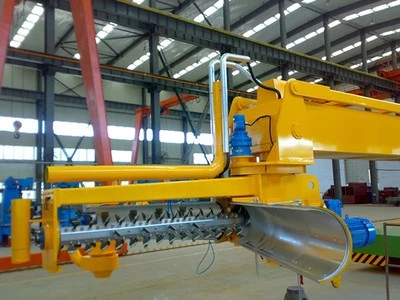
In the casting industry, a Boiling Cooling Bed doesn't work alone. It's often part of a larger system that includes other equipment. For example, the Grinding Wheel Rotor Sand Mixer is used to mix the sand before it enters the cooling bed. A well - mixed sand ensures more uniform cooling in the Boiling Cooling Bed.
The Resin Sand Mixer is another important piece of equipment. It mixes resin with the sand, which can affect the properties of the sand and, in turn, the operation of the cooling bed. And the Pneumatic Conveyor Tank is used to transport the sand to and from the cooling bed. These pieces of equipment all interact with the Boiling Cooling Bed, and their proper operation is also crucial for the overall efficiency of the system.

Conclusion and Call to Action
In conclusion, the gas - solid ratio is a critical factor in the operation of a Boiling Cooling Bed. It affects fluidization, heat transfer, and pressure drop, all of which are essential for the efficient cooling of solid materials. As a supplier, we have the expertise and experience to help you optimize the gas - solid ratio for your specific needs.
If you're in the market for a Boiling Cooling Bed or need advice on improving the operation of your existing one, don't hesitate to reach out. We're here to assist you in getting the most out of your equipment and ensuring the success of your industrial processes.
References
- Smith, J. (2018). Industrial Fluidization Technology. New York: Wiley.
- Johnson, A. (2020). Heat Transfer in Fluidized Beds. London: Elsevier.