

Hey there! As a supplier of V - method Casting Line, I'm super stoked to take you on a journey through the history of this amazing technology.
The V - method Casting Line, also known as the Vacuum Sealed Molding method, has a pretty interesting backstory. It all started way back in the 1970s. At that time, the casting industry was facing a bunch of challenges. Traditional casting methods had issues like high energy consumption, poor casting quality, and a whole lot of environmental pollution. There was a real need for a new, more efficient, and eco - friendly way to cast metals.
A group of brilliant engineers and researchers set out to find a solution. They came up with the idea of using vacuum to hold the sand in place during the casting process. This was a game - changer! Instead of relying on chemical binders to hold the sand mold together, the V - method used a vacuum to create a tight seal around the pattern.
The first few prototypes of the V - method Casting Line were a bit rough around the edges. There were problems with maintaining the vacuum, and the equipment wasn't very reliable. But with time and a whole lot of hard work, the technology started to improve.
In the 1980s, the V - method started to gain some traction in the industry. Manufacturers were starting to see the benefits of this new casting method. The castings produced using the V - method had better surface finish, higher dimensional accuracy, and fewer defects compared to those made with traditional methods. Plus, it was a lot more environmentally friendly since it didn't use chemical binders that could release harmful fumes.
As the years went by, the V - method Casting Line continued to evolve. New materials were developed for the sand and the mold, which made the process even more efficient. The equipment became more automated, reducing the need for manual labor and increasing productivity.

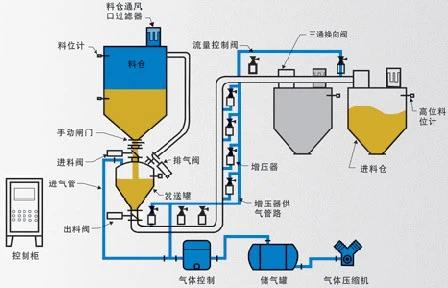
Let's talk about some of the key components of a modern V - method Casting Line. One important part is the Pneumatic Conveyor Tank. This is used to transport the sand from one part of the line to another. It uses compressed air to move the sand quickly and efficiently, which helps keep the production process running smoothly.
Another crucial component is the Resin Sand Mixer. Even though the V - method doesn't rely on resin as a primary binder, in some cases, a small amount of resin might be used to improve certain properties of the sand. The resin sand mixer ensures that the resin is evenly distributed throughout the sand, which is essential for consistent casting quality.
The Grinding Wheel Rotor Sand Mixer is also an important part of the line. It helps to break up any clumps in the sand and ensures that the sand particles are of a uniform size. This is important because it affects how well the sand can be packed around the pattern and how the casting will turn out.
Today, the V - method Casting Line is used in a wide range of industries. It's popular in the automotive industry for making engine parts, transmission components, and other high - precision parts. It's also used in the aerospace industry for casting complex and lightweight parts. In the general machinery industry, it's used to make all sorts of components, from small gears to large machine frames.
One of the biggest advantages of the V - method Casting Line is its flexibility. It can be used to cast a wide variety of metals, including iron, steel, aluminum, and copper. Whether you're making a small, intricate part or a large, heavy casting, the V - method can handle it.
Another advantage is the cost - effectiveness. Even though the initial investment in a V - method Casting Line might be a bit high, in the long run, it can save a lot of money. The reduced need for chemical binders, lower energy consumption, and higher productivity all contribute to lower production costs.
As a supplier of V - method Casting Line, I've seen firsthand how this technology has transformed the casting industry. We've worked with many customers over the years, and we've helped them improve their casting processes, increase their productivity, and reduce their environmental impact.
If you're in the casting industry and you're looking for a better way to produce high - quality castings, I highly recommend considering the V - method Casting Line. It's a proven technology with a long history of success. Whether you're a small - scale manufacturer or a large - scale production facility, we can help you find the right V - method Casting Line for your needs.
If you're interested in learning more about our V - method Casting Line or if you want to discuss your specific requirements, don't hesitate to reach out. We're always happy to have a chat and see how we can help you take your casting operations to the next level.
References
- "Casting Technology Handbook", various authors, published in the 2000s
- Industry reports on the development of casting methods over the past few decades.