

Hey there! As a supplier of sand temperature regulators, I've seen firsthand how different models can vary in terms of features, performance, and overall suitability. In this blog, I'm gonna break down the key differences between various models of sand temperature regulators to help you make an informed decision when it comes to choosing the right one for your needs.
Basic Functionality
At the core, all sand temperature regulators are designed to control the temperature of casting sand. This is crucial because the temperature of the sand can significantly affect the quality of the casting. If the sand is too hot, it can cause defects in the cast part, like porosity or shrinkage. On the other hand, if it's too cold, the sand might not flow properly during the molding process.
Water - Cooling Models
One of the most common types is the water - cooling sand temperature regulator. These models use water as a coolant to remove heat from the sand. They usually work by circulating water through a series of pipes or channels that are in contact with the sand. The heat from the sand is transferred to the water, which then carries it away.
The advantage of water - cooling models is that they're generally very efficient at heat transfer. Water has a high specific heat capacity, which means it can absorb a lot of heat without a large increase in temperature. This makes them great for high - volume production where a large amount of sand needs to be cooled quickly.
However, water - cooling models also have some drawbacks. They require a constant supply of water, which can be a problem in areas with limited water resources. Additionally, there's always a risk of water leakage, which can damage the equipment and pose a safety hazard.
Air - Cooling Models
Air - cooling sand temperature regulators, as the name suggests, use air to cool the sand. They typically have a fan or blower that blows air over the sand, carrying away the heat. These models are often more compact and easier to install compared to water - cooling models.

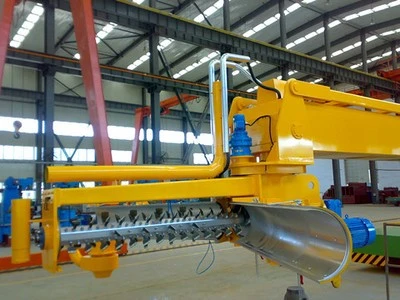
They're also a better option in areas where water is scarce or expensive. Since they don't rely on water, there's no risk of water leakage. But air - cooling models are generally less efficient than water - cooling ones. Air has a lower specific heat capacity than water, so it can't absorb as much heat per unit volume. This means they might take longer to cool the sand, especially in large - scale operations.
Capacity and Throughput
Another important difference between sand temperature regulator models is their capacity and throughput. Capacity refers to the amount of sand that the regulator can hold at one time, while throughput is the rate at which it can process sand.
Small - Scale Models
For small foundries or workshops with low production volumes, small - scale sand temperature regulators are a good choice. These models usually have a lower capacity, perhaps holding only a few tons of sand at a time. Their throughput is also relatively low, meaning they can only process a small amount of sand per hour.
The advantage of small - scale models is that they're more affordable and take up less space. They're also easier to operate and maintain. These models are great for businesses that are just starting out or those that produce small - batch castings.
Large - Scale Models
In contrast, large - scale sand temperature regulators are designed for high - volume production. They have a much larger capacity, sometimes capable of holding tens of tons of sand. Their throughput is also significantly higher, allowing them to process large quantities of sand in a short period of time.
These models are more expensive and require more space. They also need a more powerful energy source and more complex maintenance. But for large foundries that produce a large number of castings every day, the investment in a large - scale sand temperature regulator can be well worth it.
Control Systems
The control system is another area where different models of sand temperature regulators can vary. A good control system is essential for accurate temperature regulation and efficient operation.
Manual Control
Some older or more basic models come with manual control systems. With a manual control system, the operator has to set the temperature and other parameters manually. This requires a high level of skill and experience, as the operator needs to monitor the sand temperature constantly and make adjustments as needed.
Manual control systems are generally less expensive, but they're also less precise and more prone to human error. They're suitable for simple operations where the sand temperature requirements are not very strict.
Automated Control
Most modern sand temperature regulators feature automated control systems. These systems use sensors to measure the sand temperature, and then adjust the cooling or heating parameters automatically to maintain the desired temperature.
Automated control systems are more accurate and reliable. They can also save a lot of time and labor, as the operator doesn't need to monitor the temperature constantly. However, they're more expensive and require more technical knowledge to install and maintain.
Additional Features
Some sand temperature regulator models come with additional features that can enhance their performance and functionality.
Integrated Filtration Systems
Some regulators have integrated filtration systems. These systems help to remove impurities from the sand as it's being cooled or heated. This can improve the quality of the casting by reducing the risk of defects caused by impurities in the sand.
Digital Displays
Many modern models are equipped with digital displays that show the sand temperature, operating status, and other important information. This makes it easier for the operator to monitor and control the system.
Compatibility with Other Equipment
It's also important to consider how well the sand temperature regulator can work with other equipment in your foundry. For example, you might want a model that can be easily integrated with your Vibration Compaction Table, Resin Sand Mixer, or Vertical Split Core Shooting Molding Line.
Conclusion
So, as you can see, there are many differences between different models of sand temperature regulators. When choosing a model, you need to consider factors like your production volume, water availability, budget, and specific sand temperature requirements. If you're not sure which model is right for you, don't hesitate to reach out. We're here to help you make the best decision for your business. Whether you're a small workshop or a large - scale foundry, we have the perfect sand temperature regulator to meet your needs. Contact us today to start the procurement negotiation process, and let's work together to improve your casting operations!
References
- Various industry brochures and manuals on sand temperature regulators.
- Personal experience working with different sand temperature regulator models.