

Hey there! As a supplier of sand screening machines, I often get asked about the differences between vibrating sand screening machines and rotary sand screening machines. Well, let's dive right in and break it down.

Working Principle
First off, let's talk about how these two types of machines work. A vibrating sand screening machine operates on the principle of vibration. It uses a vibrating motor to generate vibrations that are transferred to the screening surface. These vibrations cause the sand to move in a specific pattern, allowing the smaller particles to pass through the screen while the larger ones are retained on top. It's like shaking a sieve to separate different - sized grains.
On the other hand, a rotary sand screening machine works by rotating a cylindrical screen. The sand is fed into one end of the cylinder, and as the cylinder rotates, the sand tumbles around inside. The smaller sand particles fall through the holes in the screen, and the larger ones are discharged from the other end of the cylinder. It's a bit like a giant spinning drum that sorts the sand.
Screening Efficiency
When it comes to screening efficiency, both machines have their pros and cons. Vibrating sand screening machines are great for high - volume screening. The intense vibrations can quickly separate the sand particles, and they can handle a large amount of sand in a relatively short period. They are especially effective for screening sand with a wide range of particle sizes. For example, if you have a mix of fine, medium, and coarse sand, a vibrating screen can sort them out efficiently.
Rotary sand screening machines, however, are more suitable for screening sand with a relatively narrow particle size range. Since the sand tumbles inside the rotating cylinder, it has more time to be screened. This makes them more accurate in separating sand particles of similar sizes. But they generally have a lower screening capacity compared to vibrating screens. If you need to screen a large quantity of sand quickly, a vibrating screen might be a better choice.
Structure and Maintenance
The structure of these two machines is also quite different. Vibrating sand screening machines usually have a relatively simple structure. They consist of a vibrating motor, a screening frame, and the screening mesh. This simplicity makes them easy to install and maintain. You can easily replace the screening mesh if it gets worn out, and the vibrating motor is also relatively easy to service.
Rotary sand screening machines, on the other hand, have a more complex structure. They have a rotating cylinder, a drive system, and support structures. The rotating cylinder needs to be well - balanced to ensure smooth operation, and the drive system requires regular maintenance. However, the complexity also means that they are more durable in some cases. The rotating parts are designed to withstand continuous rotation, and with proper maintenance, they can have a long service life.
Application Scenarios
The choice between a vibrating sand screening machine and a rotary sand screening machine also depends on the application scenario. Vibrating sand screening machines are widely used in industries such as construction, mining, and quarrying. In construction sites, they can be used to screen sand for concrete production. In mining and quarrying, they can be used to separate different - sized minerals from the sand.
Rotary sand screening machines are often used in applications where a high - precision screening is required. For example, in the foundry industry, they can be used to screen casting sand. The high - precision screening ensures that the sand has the right particle size for the casting process.
Cost Considerations
Cost is always an important factor when choosing a sand screening machine. Vibrating sand screening machines are generally more affordable in terms of initial purchase price. Their simple structure means that they are cheaper to manufacture, and this cost is passed on to the customers. However, they may consume more energy due to the high - intensity vibrations.
Rotary sand screening machines, on the other hand, have a higher initial purchase price. Their complex structure and precision engineering make them more expensive. But they usually consume less energy during operation, which can result in lower long - term operating costs.
Related Equipment
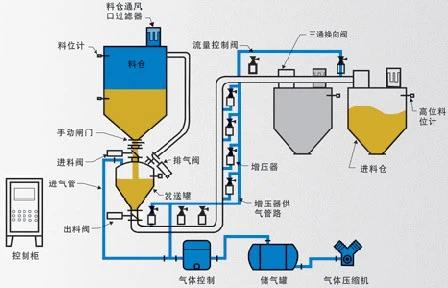
If you're in the sand - related industry, you might also be interested in some related equipment. For example, a Pneumatic Conveyor Tank can be used to transport the screened sand from one place to another. It uses air pressure to move the sand, which is a very efficient way of transportation.
Another useful piece of equipment is the Grinding Wheel Rotor Sand Mixer. This machine can be used to mix the sand with other materials, such as binders, to create a homogeneous mixture.
And if you're in the casting industry, a Molding Machine is essential. It uses the screened and mixed sand to create molds for casting.
Conclusion
In conclusion, the choice between a vibrating sand screening machine and a rotary sand screening machine depends on various factors such as screening efficiency, structure, application scenario, and cost. If you need high - volume screening with a wide range of particle sizes, a vibrating sand screening machine might be the way to go. If you need high - precision screening for a narrow particle size range, a rotary sand screening machine could be more suitable.
If you're interested in purchasing a sand screening machine or any of the related equipment, feel free to reach out to us. We can provide you with more detailed information and help you choose the right machine for your specific needs. Our team of experts is always ready to assist you in making the best decision for your business.
References
- "Sand Screening Technology and Applications" - Industry Research Report
- "Comparative Study of Different Types of Sand Screening Machines" - Academic Journal Article