

As a supplier of vibrating sand droppers, I often get asked about the potential of using this equipment in combination with other tools in the casting and sand - treatment industry. In this blog, I will delve into the possibilities and benefits of integrating a vibrating sand dropper with other pieces of equipment.
Compatibility with Resin Sand Production Line
The Resin Sand Production Line is a crucial part of many foundries. It is designed to produce high - quality resin sand, which is used in various casting processes. A vibrating sand dropper can play a significant role in this production line.
In a resin sand production line, the sand needs to be evenly distributed and fed into different processing units. The vibrating sand dropper, with its unique vibrating mechanism, can ensure a consistent and controlled flow of sand. It can be installed at the inlet of the resin sand mixer in the production line. By providing a steady stream of sand, it helps the mixer to blend the sand with resin and other additives more effectively. This results in a more homogeneous resin sand mixture, which is essential for high - quality castings.
Moreover, the vibrating action of the sand dropper can break up any small clumps in the sand, ensuring that only fine and free - flowing sand enters the production line. This reduces the risk of blockages in the subsequent processing units and improves the overall efficiency of the resin sand production line.
Synergy with Pneumatic Conveyor Tank
The Pneumatic Conveyor Tank is used to transport sand from one location to another within a foundry using pneumatic pressure. When combined with a vibrating sand dropper, the two can create a more efficient sand - handling system.
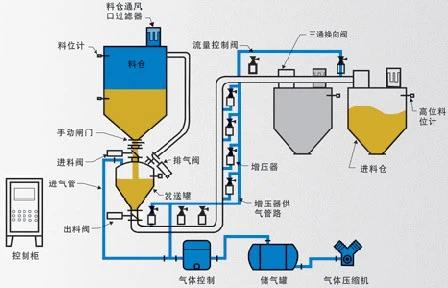

The vibrating sand dropper can be placed at the source of the sand, such as a sand storage bin. As it vibrates, it feeds the sand into the pneumatic conveyor tank at a controlled rate. This is important because an uneven or excessive feed of sand into the conveyor tank can lead to problems such as clogging and reduced conveying efficiency.
The vibrating sand dropper can also help to prevent bridging or arching of the sand in the storage bin. Bridging occurs when the sand forms a stable arch over the outlet of the bin, preventing the sand from flowing freely. The vibration from the sand dropper disrupts this arch, ensuring a continuous supply of sand to the pneumatic conveyor tank. Once the sand is in the conveyor tank, the pneumatic system can then transport it quickly and efficiently to the desired location, such as a molding machine or a sand reclamation unit.
Integration with Sand Temperature Regulator
The Sand Temperature Regulator is used to control the temperature of the sand in a foundry. Maintaining the right sand temperature is crucial for the quality of the castings. A vibrating sand dropper can be integrated with a sand temperature regulator to improve the overall sand - treatment process.
The vibrating sand dropper can feed the sand into the sand temperature regulator at a consistent rate. This allows the temperature regulator to work more effectively, as it can precisely control the heating or cooling of the sand based on a steady flow. If the sand is fed in an irregular manner, the temperature regulator may have difficulty maintaining a uniform temperature throughout the sand mass.
In addition, the vibration of the sand dropper can help to improve the heat transfer efficiency within the sand. As the sand is vibrated, it becomes more fluidized, and the particles have more contact with each other and with the heating or cooling elements in the temperature regulator. This leads to a more rapid and uniform change in the sand temperature, reducing the processing time and improving the quality of the sand for casting.
Advantages of Combined Use
There are several advantages to using a vibrating sand dropper in combination with other equipment. Firstly, it improves the overall efficiency of the sand - treatment process. By ensuring a consistent and controlled flow of sand, it reduces downtime caused by blockages and uneven feeding. This leads to higher production rates and lower operating costs.
Secondly, the combined use of equipment can enhance the quality of the final product. For example, in a resin sand production line, the homogeneous sand mixture produced with the help of a vibrating sand dropper results in better - quality castings. In the case of sand temperature regulation, the more precise temperature control achieved through integration with the sand dropper leads to sand that is more suitable for casting, reducing the likelihood of casting defects.
Thirdly, the combination of equipment can optimize the use of space in a foundry. Instead of having multiple standalone units that may require large amounts of floor space, integrating the vibrating sand dropper with other equipment allows for a more compact and streamlined layout.
Challenges and Solutions
While there are many benefits to combining a vibrating sand dropper with other equipment, there are also some challenges. One of the main challenges is the synchronization of the different equipment. For example, the feeding rate of the sand dropper needs to be coordinated with the processing capacity of the other equipment. If the sand dropper feeds sand too quickly, it may overwhelm the downstream equipment, while a slow feed rate may lead to under - utilization of the equipment.
To address this challenge, modern vibrating sand droppers are often equipped with adjustable vibration settings. This allows operators to fine - tune the feeding rate according to the requirements of the other equipment. Additionally, advanced control systems can be used to monitor and adjust the operation of all the integrated equipment in real - time, ensuring optimal performance.
Another challenge is the maintenance of the combined system. Different equipment may have different maintenance requirements, and it is important to ensure that all the components are properly maintained to avoid breakdowns. Regular inspections and preventive maintenance schedules should be established for each piece of equipment, and training should be provided to the operators to ensure they can handle basic maintenance tasks.
Conclusion
In conclusion, a vibrating sand dropper can be effectively used in combination with other equipment such as the resin sand production line, pneumatic conveyor tank, and sand temperature regulator. The integration of these equipment offers numerous benefits, including improved efficiency, enhanced product quality, and optimized space utilization. While there are some challenges associated with the combined use, these can be overcome through proper design, adjustment, and maintenance.
If you are interested in exploring the possibilities of using a vibrating sand dropper in combination with other equipment for your foundry or sand - treatment process, I encourage you to contact us for a detailed discussion. We can provide you with customized solutions based on your specific requirements and help you achieve a more efficient and productive sand - handling system.
References
- "Casting Sand Treatment Handbook", Industry Press, 20XX
- "Advanced Equipment Integration in Foundries", Journal of Foundry Technology, Vol. XX, Issue XX, 20XX