

Can a Bowl Sand Mixer be used in rubber - grade sand mixing?
In the industrial realm, the question of whether a bowl sand mixer can be employed in rubber - grade sand mixing is both relevant and crucial. As a supplier of bowl sand mixers, I am often confronted with this query from potential clients. In this blog, I will delve into the technical aspects, advantages, and limitations to provide a comprehensive answer.
Technical Analysis of Bowl Sand Mixers
Bowl sand mixers are well - known for their efficient mixing capabilities. They typically consist of a bowl - shaped container where the sand and other additives are placed. Inside the bowl, there are rotating blades or paddles that agitate the materials, ensuring a homogeneous mixture. The design of the bowl and the movement of the mixing elements are engineered to break up clumps and distribute the components evenly.
The mixing action in a bowl sand mixer can be adjusted in terms of speed and intensity. This flexibility allows for customization based on the specific requirements of the sand mixture. For instance, if a finer and more thorough mix is needed, the mixer can be set to a higher speed and longer mixing time.
Characteristics of Rubber - Grade Sand
Rubber - grade sand has unique properties. It needs to have a specific particle size distribution, shape, and chemical composition to be suitable for use in rubber applications. The sand should be able to bond well with the rubber matrix, enhance the mechanical properties of the rubber product, and resist abrasion.
Particle size is a critical factor. If the sand particles are too large, they may cause uneven stress distribution in the rubber, leading to premature failure. On the other hand, if the particles are too small, they may not provide the desired reinforcement effect. The shape of the sand particles also matters. Angular particles tend to provide better mechanical interlocking with the rubber, while rounded particles may offer better flowability during the mixing process.
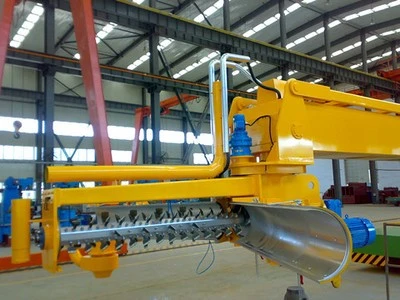

Compatibility of Bowl Sand Mixers with Rubber - Grade Sand
Advantages
- Homogeneous Mixing: Bowl sand mixers can achieve a high degree of homogeneity in the rubber - grade sand mixture. The rotating blades or paddles can effectively disperse the sand particles throughout the rubber compound, ensuring that each part of the mixture has a consistent composition. This is essential for producing high - quality rubber products with uniform properties.
- Flexibility: As mentioned earlier, the adjustable mixing parameters of bowl sand mixers make them suitable for different types of rubber - grade sand. Whether the sand has a fine or coarse particle size, the mixer can be optimized to achieve the best mixing results.
- Batch - Type Operation: Bowl sand mixers usually operate in a batch - type mode. This is beneficial for rubber - grade sand mixing because it allows for precise control of the mixture. Each batch can be carefully monitored and adjusted according to the quality requirements, ensuring that the final product meets the standards.
Limitations
- Heat Generation: During the mixing process, bowl sand mixers can generate heat. Excessive heat can be detrimental to the rubber compound, causing it to degrade or change its properties. Special cooling mechanisms may need to be installed to control the temperature during mixing.
- Wear and Tear: The abrasive nature of sand can cause significant wear and tear on the mixing elements of the bowl sand mixer. This may require frequent replacement of parts, increasing the maintenance cost.
- Limited Capacity for Large - Scale Production: While bowl sand mixers are suitable for small to medium - scale production, they may not be the most efficient option for large - scale rubber - grade sand mixing. Continuous - type mixers may be more appropriate for high - volume production.
Related Equipment in Sand Treatment
In addition to bowl sand mixers, there are other equipment that can be used in the process of rubber - grade sand treatment.
A Vibrating Sand Dropper can be used to feed the sand into the mixer evenly. It ensures a consistent flow of sand, which is important for achieving a uniform mixture. The vibrating action helps to break up any clumps in the sand before it enters the mixer.
A Sand Screening Machine is used to separate the sand particles according to their size. This is crucial for obtaining rubber - grade sand with the desired particle size distribution. By removing the oversized or undersized particles, the quality of the sand can be improved.
A Resin Sand Mixer can also be considered in some cases. It is designed to mix sand with resin, which can enhance the bonding properties of the sand in the rubber compound.
Conclusion
In conclusion, a bowl sand mixer can be used in rubber - grade sand mixing, but it has both advantages and limitations. It offers excellent homogeneous mixing and flexibility, which are important for producing high - quality rubber products. However, issues such as heat generation, wear and tear, and limited capacity for large - scale production need to be considered.
When choosing equipment for rubber - grade sand mixing, it is essential to evaluate the specific requirements of the production process, including the volume of production, the quality of the sand, and the properties of the rubber compound. By combining bowl sand mixers with other related equipment such as vibrating sand droppers, sand screening machines, and resin sand mixers, a more efficient and effective sand treatment process can be achieved.
If you are interested in our bowl sand mixers or need more information about sand mixing equipment for rubber - grade sand, please feel free to contact us for further discussion and procurement negotiation.
References
- "Handbook of Rubber Technology" by K. George Thomas
- "Industrial Mixing: Science and Practice" by Edward L. Paul, Victor A. Atiemo - Obeng, and Suzanne M. Kresta