

Precision steel balls are essential components in various industries, including automotive, aerospace, and manufacturing. As a trusted steel balls supplier, I'm often asked about the production technology behind these small yet crucial parts. In this blog, I'll take you through the detailed process of manufacturing precision steel balls.
Raw Material Selection
The first step in producing precision steel balls is selecting the right raw material. High - quality steel is the foundation for manufacturing reliable steel balls. We typically choose bearing steel, such as GCr15, which has excellent hardness, wear resistance, and toughness. This type of steel contains a specific amount of carbon, chromium, and other alloying elements. The carbon content provides hardness, while chromium enhances corrosion resistance and improves the steel's hardenability.
Before the actual production, the raw steel bars are carefully inspected. We check for any surface defects, internal cracks, or inconsistent chemical compositions. Only the steel bars that meet our strict quality standards are used for further processing.
Cold Heading
Once the raw material is selected, the next step is cold heading. Cold heading is a forging process where the steel bar is cut into small pieces of the appropriate length, called slugs. These slugs are then fed into a cold - heading machine. Inside the machine, a high - pressure punch compresses the slug into a spherical shape.
The cold - heading process is crucial as it determines the initial size and basic shape of the steel ball. The precision of this step is vital, as any deviation in size or shape at this stage can lead to problems in subsequent processing. Modern cold - heading machines are highly automated and can produce a large number of steel balls with consistent quality in a short time.
Rough Grinding
After cold heading, the steel balls have a rough surface and may not meet the required size and roundness. So, they go through a rough - grinding process. In this process, the steel balls are placed in a grinding machine with a grinding wheel. The grinding wheel rotates at a high speed, and the steel balls are rubbed against it, gradually removing the excess material on the surface.
The rough - grinding process is mainly used to improve the roundness and reduce the diameter of the steel balls to a more accurate size. At the same time, it also helps to remove any burrs or irregularities left from the cold - heading process. The grinding parameters, such as the rotation speed of the grinding wheel and the pressure applied to the steel balls, are carefully controlled to ensure the quality of the rough - grinding process.
Heat Treatment
Heat treatment is a critical step in the production of precision steel balls. It significantly affects the hardness, toughness, and wear resistance of the steel balls. After rough grinding, the steel balls are heated to a specific temperature in a heat - treatment furnace and then quenched in a quenching medium, such as oil or water.
Quenching rapidly cools the steel balls, which transforms the internal structure of the steel, increasing its hardness. However, quenching also makes the steel balls brittle. To relieve the internal stress and improve the toughness, the steel balls are then tempered. During tempering, the steel balls are heated to a lower temperature and held for a certain period.
The heat - treatment process requires precise control of temperature and time. Incorrect heat - treatment parameters can lead to problems such as cracking, uneven hardness, or reduced mechanical properties of the steel balls.

Fine Grinding
After heat treatment, the steel balls need further processing to achieve the required precision. The fine - grinding process is carried out to improve the surface finish and roundness of the steel balls to a higher level. In fine grinding, a finer - grained grinding wheel is used, and the grinding process is more precise than rough grinding.
The steel balls are placed in a precision - grinding machine, where they are ground under strict control of parameters. The fine - grinding process can reduce the surface roughness of the steel balls to a very low level and improve their roundness to meet the high - precision requirements of various applications.
Polishing
Polishing is the final step in the production of precision steel balls. It gives the steel balls a smooth and shiny surface, which not only improves the appearance but also reduces friction and wear in practical applications.
In the polishing process, the steel balls are placed in a polishing machine with a polishing agent. The polishing agent can be a mixture of abrasive powder and a lubricant. The machine rotates the steel balls, and the polishing agent gradually polishes the surface of the steel balls, making them extremely smooth.
Quality Control
Throughout the production process, strict quality control is carried out at every step. We use a variety of inspection methods, such as optical inspection, dimensional measurement, and hardness testing. Optical inspection is used to detect any surface defects, such as cracks, pits, or scratches. Dimensional measurement ensures that the steel balls meet the required size and roundness standards. Hardness testing is used to verify the mechanical properties of the steel balls.
Only the steel balls that pass all the quality - control tests are packaged and shipped to our customers. We understand that the quality of our steel balls directly affects the performance of our customers' products, so we never compromise on quality.
Related Equipment in the Production Process
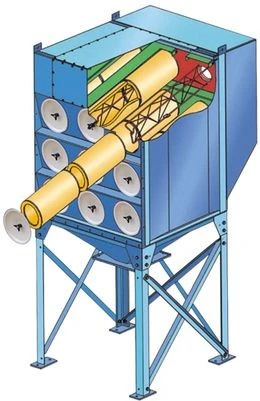
In the production of precision steel balls, several pieces of equipment play important roles. For example, Filter Cartridge Dust Collector is used to collect the dust generated during the grinding and polishing processes. This helps to maintain a clean working environment and protect the health of workers.
The Side Plug - in Dust Collector is another useful device. It can effectively remove dust and debris from the production area, ensuring the normal operation of the production equipment and improving the quality of the steel balls.
The Shot Blasting Device is also an important piece of equipment. It can be used to clean the surface of the steel balls after heat treatment, removing any oxide scale or impurities on the surface and preparing the steel balls for subsequent processing.
Contact for Purchase and Negotiation
If you are in need of high - quality precision steel balls, we are here to serve you. Our company has rich experience in the production of steel balls and can provide you with products that meet your specific requirements. Whether you need steel balls for automotive applications, aerospace components, or other industrial uses, we can offer you the best solutions.
Feel free to contact us to discuss your needs. We are looking forward to establishing a long - term and cooperative relationship with you.
References
- Smith, J. (2018). Manufacturing Technology of Precision Components. New York: Industrial Press.
- Johnson, R. (2019). Steel Materials and Their Applications in Ball Manufacturing. London: Metal Science Publishers.
- Brown, A. (2020). Quality Control in Precision Manufacturing Processes. Sydney: Manufacturing Insights.