

As a seasoned supplier in the casting sand treatment industry, I understand the critical role that temperature plays in the entire process. Temperature requirements in casting sand treatment are not arbitrary; they are based on scientific principles and practical experience, which are essential for ensuring the quality of the final casting products.
The Impact of Temperature on Sand Properties
Thermal Expansion
One of the primary effects of temperature on casting sand is thermal expansion. Different types of sand have different coefficients of thermal expansion. For example, silica sand, which is widely used in casting, expands when heated. This expansion can cause problems such as cracking in the mold if not properly managed. If the temperature rises too rapidly during the casting process, the sand may expand unevenly, leading to internal stresses in the mold. These stresses can result in the formation of cracks, which can ultimately affect the integrity of the casting.

Bonding Strength
The bonding strength of the sand mixture is also significantly influenced by temperature. In most casting sand systems, binders are used to hold the sand grains together. The performance of these binders is highly temperature - dependent. At lower temperatures, the binder may not fully cure, resulting in a weak mold that is prone to breakage. On the other hand, if the temperature is too high, the binder may over - cure or even decompose, losing its bonding properties. For instance, in a resin - bonded sand system, the optimal curing temperature range needs to be carefully controlled to achieve the desired bonding strength.
Temperature Requirements in Different Stages of Casting Sand Treatment
Sand Preparation
During the sand preparation stage, the temperature of the sand and the additives needs to be within a certain range. When mixing the sand with binders and other additives, the temperature affects the reactivity of the binder and the homogeneity of the mixture. For example, if the sand is too cold, the binder may not disperse evenly throughout the sand, leading to inconsistent bonding. A typical temperature range for sand preparation in many resin - bonded sand systems is around 20 - 30°C. This temperature range allows for good flowability of the binder and ensures a uniform mixture.
Molding
In the molding process, maintaining the right temperature is crucial for creating a high - quality mold. The temperature of the mold cavity affects the solidification rate of the molten metal. If the mold is too cold, the molten metal may solidify too quickly, leading to incomplete filling of the mold and the formation of defects such as cold shuts. Conversely, if the mold is too hot, the solidification time may be too long, which can cause problems like excessive shrinkage and porosity. For some common casting alloys, the mold temperature during the pouring process is often maintained between 150 - 300°C, depending on the type of alloy and the complexity of the casting.
Core Making
Core making is another important step in casting sand treatment. Cores are used to create internal cavities in the casting. Similar to the molding process, the temperature during core making affects the quality of the cores. The curing temperature of the core sand is carefully controlled to ensure that the cores have the right strength and dimensional stability. In a hot - box core making process, the core sand is heated to a specific temperature (usually around 200 - 300°C) to cure the resin binder quickly and form a strong core.
Sand Reclamation
Sand reclamation is an important aspect of casting sand treatment from an environmental and economic perspective. The temperature requirements in sand reclamation depend on the reclamation method. In thermal reclamation, high temperatures are used to burn off the residual binder and other contaminants on the sand grains. The temperature in thermal reclamation can reach up to 700 - 900°C. This high temperature effectively removes the organic binders and other impurities, allowing the sand to be reused in the casting process.
Temperature Monitoring and Control
To meet the temperature requirements in casting sand treatment, accurate temperature monitoring and control systems are essential. There are various types of temperature sensors available, such as thermocouples and infrared sensors. Thermocouples are commonly used for measuring the temperature of the sand, the mold, and the molten metal. They are reliable and can provide accurate temperature readings in a wide range of applications. Infrared sensors, on the other hand, are useful for non - contact temperature measurement, which is particularly suitable for measuring the temperature of hot surfaces such as the mold cavity.
In addition to sensors, advanced control systems are used to regulate the temperature. These control systems can adjust the heating or cooling equipment based on the measured temperature. For example, in a sand pre - heating system, the control system can adjust the power of the heaters to maintain the sand at the desired temperature.
Related Equipment and Their Temperature Requirements
Lost Foam Sand Treatment
In Lost Foam Sand Treatment, temperature control is also a key factor. The lost foam pattern is made of expanded polystyrene (EPS) or similar materials. When the molten metal is poured into the mold, the pattern vaporizes. The temperature of the molten metal and the mold affects the vaporization process. If the temperature is too low, the pattern may not vaporize completely, leaving residues in the casting. A proper temperature range for the molten metal in lost foam casting is typically higher than in traditional sand casting, usually around 1400 - 1600°C for some ferrous alloys.
Pneumatic Conveyor Tank
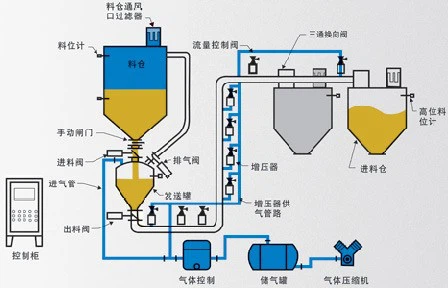
The Pneumatic Conveyor Tank is used to transport the sand in the casting sand treatment process. The temperature of the sand being transported can affect the performance of the pneumatic conveyor. If the sand is too hot, it may cause problems such as clogging or damage to the conveyor components. Therefore, the sand temperature needs to be within a range that is suitable for the conveyor's operation. Generally, the sand temperature should not exceed 80 - 100°C to ensure smooth operation of the pneumatic conveyor.
Injection Molding Machine
In the context of casting sand treatment, an Injection Molding Machine may be used for making sand - based components or molds. The temperature of the injection chamber and the mold in the injection molding machine needs to be precisely controlled. The injection temperature affects the flowability of the sand - binder mixture. A typical injection temperature range for some sand - resin mixtures in an injection molding machine is around 50 - 100°C, depending on the specific material properties.
Meeting the Temperature Requirements for Customers
As a casting sand treatment supplier, we understand the importance of helping our customers meet the temperature requirements in their casting processes. We offer a comprehensive range of products and services to ensure that our customers can achieve optimal temperature control in every stage of casting sand treatment. Our team of experts can provide technical support and advice on temperature management, including the selection of appropriate temperature sensors and control systems.
We also continuously research and develop new products and technologies to improve the temperature - related performance of our casting sand treatment solutions. Whether it is developing sand mixtures with better temperature stability or improving the design of our equipment for more precise temperature control, we are committed to providing our customers with the best - in - class solutions.
If you are in the casting industry and are looking for a reliable partner to meet your casting sand treatment needs, especially in terms of temperature control, we would be delighted to have a discussion with you. Please feel free to reach out to us to start a procurement negotiation. We are confident that our expertise and products can help you improve the quality and efficiency of your casting processes.
References
- Campbell, J. (2003). Castings. Butterworth - Heinemann.
- Flemings, M. C. (1974). Solidification Processing. McGraw - Hill.
- German, R. M. (2005). Powder Metallurgy Science. Metal Powder Industries Federation.