

When it comes to setting up or upgrading a foundry, one of the most critical decisions you'll make is choosing the right Resin Sand Production Line for your factory. As a seasoned supplier in this field, I've witnessed firsthand the impact that a well - chosen production line can have on a foundry's efficiency, product quality, and overall profitability. In this blog, I'll share some key factors to consider when making this important choice.
Production Capacity
The first and perhaps most obvious factor is your factory's production capacity requirements. You need to have a clear understanding of how much resin sand you need to produce per day, week, or month. If your production volume is relatively low, say less than 10 tons per day, a small - scale Resin Sand Production Line might be sufficient. These lines are often more compact, cost - effective, and easier to operate.
On the other hand, if your factory has high - volume production needs, exceeding 50 tons per day, you'll require a large - scale, fully automated production line. Such lines can handle continuous and high - speed production, but they also come with a higher initial investment and more complex maintenance requirements. For example, a large - scale line might be equipped with multiple Resin Sand Mixers Resin Sand Mixer working in tandem to ensure a continuous supply of well - mixed resin sand.
Quality Requirements
The quality of the resin sand produced is directly related to the quality of the final castings. Different casting processes and products have different quality requirements for the resin sand. For instance, precision castings demand a higher degree of sand uniformity, lower moisture content, and better resin distribution.
When choosing a production line, look for features that can ensure high - quality sand production. Advanced sand reclamation systems can remove impurities and old resin from the used sand, improving the sand's reusability and quality. Additionally, accurate resin and hardener dosing systems are essential for achieving the right sand - resin ratio, which directly affects the sand's strength and other properties.
Space Availability
The physical space available in your factory is another crucial consideration. Resin Sand Production Lines come in various sizes and configurations. If your factory has limited floor space, you'll need to opt for a compact and space - saving design. Some production lines are designed with a modular structure, which allows for flexible installation and can be adjusted according to your available space.
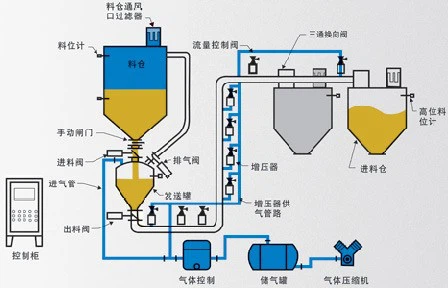
In contrast, if you have ample space, you can choose a more comprehensive and spacious production line that includes additional equipment such as large - capacity sand storage silos and Pneumatic Conveyor Tanks Pneumatic Conveyor Tank for efficient sand transportation.
Energy Efficiency
Energy costs are a significant part of the operating expenses in a foundry. An energy - efficient Resin Sand Production Line can help you save a substantial amount of money in the long run. Look for production lines that use energy - saving motors, advanced heating and cooling systems, and efficient sand reclamation technologies.
For example, some modern sand reclamation systems use less energy by optimizing the process of separating old resin from the sand. Additionally, energy - efficient Resin Sand Mixers can reduce power consumption while still providing high - quality mixing.
Automation Level
The level of automation in a Resin Sand Production Line can greatly affect labor costs, production efficiency, and product consistency. Manual or semi - automated production lines are suitable for small - scale factories or those with limited budgets. These lines require more human intervention, but they can still produce good - quality resin sand with proper operation.
On the other hand, fully automated production lines are ideal for large - scale and high - volume production. They can perform tasks such as sand feeding, mixing, dosing, and transportation with minimal human involvement. This not only reduces labor costs but also improves production accuracy and consistency. However, fully automated lines usually require a higher initial investment and more technical expertise for maintenance.

Compatibility with Existing Equipment
If your factory already has some existing equipment, such as a Clay Sand Production Line Clay Sand Production Line, you need to ensure that the new Resin Sand Production Line is compatible with it. Compatibility issues can lead to inefficiencies, increased costs, and even production disruptions.
For example, if you plan to use the same sand transportation system for both clay sand and resin sand, make sure the new production line can interface smoothly with the existing system. Additionally, consider the compatibility of control systems and software to ensure seamless integration.
After - Sales Service and Support
A reliable after - sales service and support network is essential when choosing a Resin Sand Production Line. Look for a supplier who can provide timely technical support, spare parts availability, and maintenance services. A good supplier should also offer training programs for your operators to ensure they can operate and maintain the production line correctly.
In case of equipment breakdowns, quick response times and efficient repair services can minimize production downtime and losses. Some suppliers even offer remote monitoring and diagnostic services, which can help identify and solve problems before they cause major disruptions.
Cost - Benefit Analysis
Finally, you need to conduct a comprehensive cost - benefit analysis. The initial purchase price of the production line is just one part of the equation. You also need to consider long - term operating costs, including energy consumption, labor costs, maintenance costs, and the cost of raw materials.
Compare different production lines from various suppliers based on their features, performance, and prices. Look for a line that offers the best balance between cost and performance, meeting your production requirements while also providing a good return on investment.
In conclusion, choosing the right Resin Sand Production Line for your factory is a complex decision that requires careful consideration of multiple factors. By taking into account production capacity, quality requirements, space availability, energy efficiency, automation level, compatibility, after - sales service, and cost - benefit analysis, you can make an informed choice that will benefit your factory in the long run.
If you're in the process of selecting a Resin Sand Production Line for your factory, I'd be more than happy to assist you. Our company has extensive experience in providing high - quality production lines tailored to different customer needs. Contact us to start a discussion about your specific requirements and explore the best solutions for your foundry.
References
- Smith, J. (2020). "Foundry Sand Technology: Principles and Applications". Publisher: ABC Publishing.
- Johnson, R. (2019). "Advances in Resin Sand Production for Modern Casting Processes". Journal of Foundry Research, Vol. 15, Issue 2.